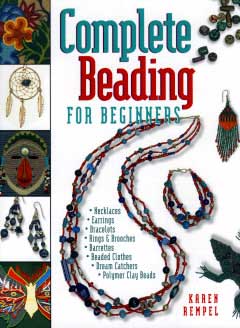
 At first glance you might not associate beadwork with technical writing. It’s true that writing Complete Beading for Beginners didn’t seem like work—it was one of the most fun things I’ve done. I never expected it to become a bestseller, with lifetime sales of over 40,000 copies! (A Canadian book is considered a bestseller when it has sold 5,000 copies.)
I first had the idea for a book on beadwork in a technical writing class at the New Westminster, BC campus of Douglas College. I wrote an eight-page sample in that class, and worked on the design in a desktop publishing class. The support I received from my teachers convinced me to try to self-publish the book. I produced four full-colour, 66-page prototypes, and generated orders for 1,500 copies of the book. However, when I approached the Royal Bank for a loan to cover printing costs, they turned me down.
If at first you don’t succeed…
When the bank turned down my request, I thought of giving up on the book. But eventually I summoned up the energy to develop Plan B—finding a publisher.
I was incredibly lucky, and my book was accepted by the first publisher I approached, BC-based Harbour Publishing. I thought I had it made, and all my work was over—now I’d just reap the rewards. It didn’t quite turn out that way—the book was accepted, but it took more than two years for it to reach publication. During the interim I learned many lessons about perseverance, compromise, and conflict resolution. Harbour wanted me to expand the book considerably, which I did. Then the book went through another major revision to fine-tune the tone and make it more suitable to the target audience. Harbour had done some market research and discovered that the teen market was untapped and keen to learn about beading, so this was the target audience we were trying to reach. Initially I had written the book with my younger siblings in mind. They were pre-teens, at least when I started writing the book!
Two Years Later
There were a few points during the development process when I seriously considered giving up on the project. But somehow I stayed with the process, and Harbour did too, and the result is a beautiful book that I’m quite proud of. By the way, this process was not what Harbour Publishing expected either. They accepted my book because another book had been dropped from their spring list. They needed a replacement and thought that my book was ready to go (my full-colour prototype looked really good!). So looking back, I think I was lucky that Harbour didn’t decide to scrap the project when it turned out to be so much work.
A Bestseller
Now, years after its release, Complete Beading is a Canadian best-seller 8 times over (the lifetime sales total as of February 2024 was 43,500 copies). Sales increased steadily from the initial publication date, and eventually they peaked. The peak year, the royalty cheque was enough for me to buy a new car! The book has also won local and international awards for technical writing (from the Society for Technical Communication).
I’m pleased about the modest financial success, but there’s another reward I hadn’t expected. For the first few years after the book was published, when I traveled, I visited bead stores to see if they carried the book, or might be interested in ordering it. The nicest thing was discovering that the store had the book, and recommended it to their customers. That seems quite incredible to me—I created something that was now out in the world with a life of its own, contributing in some way to help others create.
Resurrection 2025!
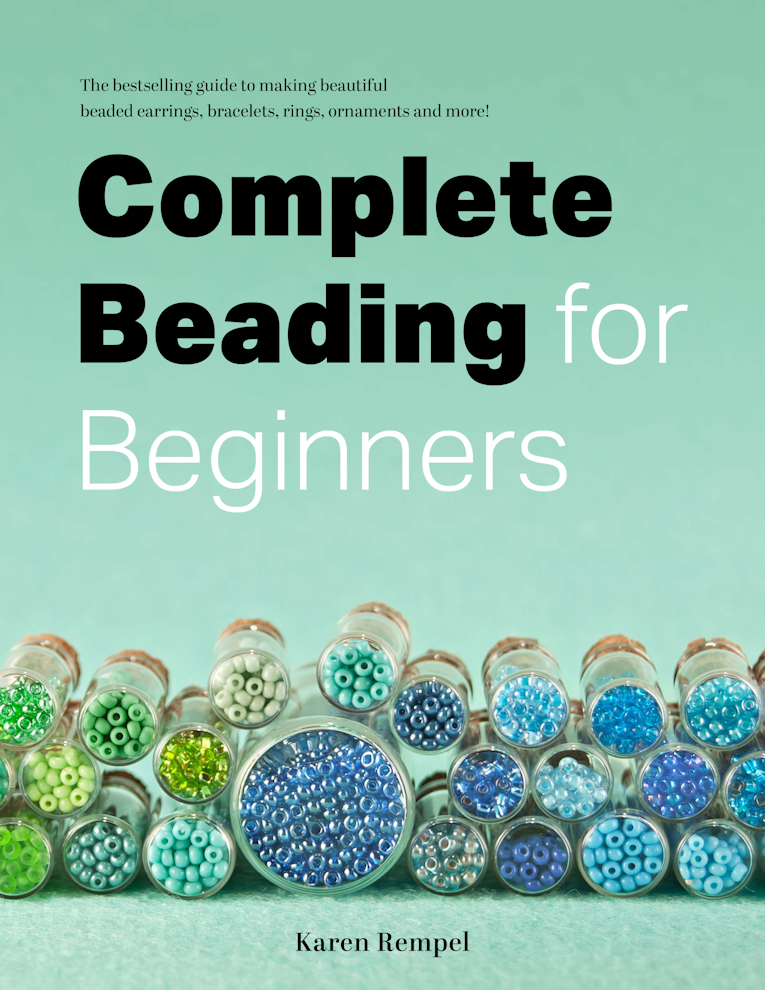 When Harbour Publishing ran out of stock for the book in 2024, they decided to give the book a new look. Here is the gorgeous new cover. The new book is available on Amazon.ca and Amazon.com. If you haven’t before, start beading now!